

Quick Answer
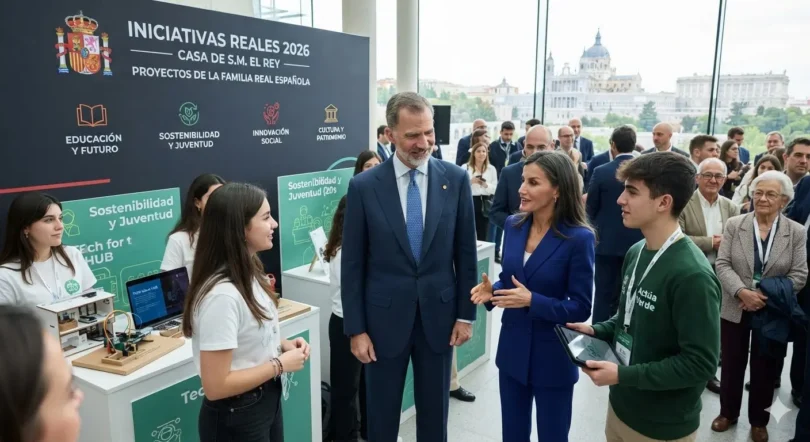
Spain’s Royal Family supports and represents many initiatives in education, health, science, culture, youth development, social inclusion and international cooperation. In 2026, major examples include the Princess of Girona Foundation programmes, the Docentes Referentes education initiative, cancer research activities, Alzheimer’s research and programmes connected with science, innovation and young people.
Table of Contents
- What Are Royal Initiatives and Programmes?
- Royal Initiatives in Spain in 2026
- King Felipe VI and His Main Initiatives
- Queen Letizia’s Social and Health Programs
- Princess Leonor and Youth Programs
- Infanta Sofía and Education Initiatives
- Queen Sofía’s Health and Social Work
- Main Areas Covered by Royal Programmes
- Why These Initiatives Matter
- Key Takeaway
- FAQs
What Are Royal Initiatives and Programmes?
Royal initiatives and programmes are activities, foundations, awards, campaigns and institutional projects supported or represented by members of a royal family.
In Spain, these activities cover a wide range of subjects. The official Royal Household lists areas such as health, education, science, sustainability, culture, sports, solidarity, training and international relations.
These activities do not all mean that the Royal Family personally runs each programme. In many cases, a member of the family serves as a patron, honorary president, guest or institutional representative.
The role can help bring public attention to an issue, recognise people doing important work and strengthen cooperation between organisations.
Royal Initiatives in Spain in 2026
The Royal Family’s 2026 activities show a broad focus rather than one single programme.
| Area | Examples of Royal Activities |
| Education | Teacher recognition, scholarships and youth training |
| Health | Cancer research and neurodegenerative disease programmes |
| Youth | Princess of Girona programmes and awards |
| Science | Research, innovation and technology events |
| Culture | Arts, literature, museums and heritage |
| Sustainability | Environmental and education-related activities |
| Social support | Inclusion, disability and vulnerable communities |
| International relations | State visits and international cooperation |
This broad approach allows different members of the family to focus on different causes.
For example, Princess Leonor has become increasingly connected with youth and education programmes, while Queen Letizia has a strong public role in health, education and social issues.
King Felipe VI and His Main Initiatives
plays a wide institutional role within Spain and represents the country during international activities.
His public programme includes science, innovation, education, business, culture, defence and international relations.
Science and Innovation
Science and innovation remain important parts of King Felipe VI’s agenda.
In 2026, he participated in activities connected with Cotec, an organisation focused on innovation. He also attended events involving research, technology and scientific development.
These activities give the Royal Household a role in highlighting Spanish research and innovation.
Education and Scholarships
The King also participates in educational events and scholarship programmes.
In July 2026, he took part in the delivery of scholarships from the Fundación “la Caixa”. Activities of this type focus public attention on education and opportunities for young people.
International Cooperation
International relations are another major part of the king’s role. State visits, meetings with foreign leaders and international forums allow the Spanish monarchy to support Spain’s diplomatic and economic relationships.
In 2026, the Royal Household’s agenda included international visits and meetings across Europe and other regions.
Queen Letizia’s Social and Health Programs
has developed a strong public role around health, education and social causes.
Her activities often involve organisations working directly with patients, families, students and vulnerable groups.
Health and Cancer Research
Health is one of Queen Letizia’s most visible areas of public work.
She has participated in activities related to cancer research and awareness. In September 2026, she attended an event marking World Cancer Research Day in Brussels.
Her work also includes rare diseases, mental health, nutrition, disability and other health-related subjects.
Education and Youth
Queen Letizia also supports education-related activities.
Her public agenda includes schools, students, teachers and educational organisations. These activities help highlight the importance of education and equal opportunities for young people.
Social Inclusion
Another important area is social inclusion. The Queen regularly meets representatives from organisations supporting people with disabilities, families and communities facing difficult circumstances.
The purpose of these engagements is often to give visibility to social issues and recognise the work of organisations providing practical support.
Princess Leonor and Youth Programs
has an increasingly visible role in programmes focused on young people, education and leadership. Her connection with the Princess of Girona Foundation is particularly important.
Princess of Girona Foundation
The Princess of Girona Foundation focuses on young people and supports education, employability, talent and personal development.
In 2026, the Royal Family participated in the foundation’s activities and annual awards.
Princess Leonor serves as its Honorary President. The foundation uses its programmes to support young people and recognise individuals who have made notable contributions in different fields.
Princess of Girona Awards
The Princess of Girona Awards recognise young talent in several areas.
The 2026 awards included categories connected with research and other areas of achievement.
For Leonor, participation in these events provides practical experience in representing youth-focused institutions and meeting young people from different professional backgrounds.
Education and Military Training
Princess Leonor’s education is also part of her preparation for future constitutional duties.
In 2026, she continued her university studies at Universidad Carlos III de Madrid and completed military training activities at the Spanish Air and Space Force Academy.
These activities are not charity programmes in the traditional sense, but they are important parts of her public preparation and future role.
Infanta Sofía and Education Initiatives
has also started taking on more visible public responsibilities. One notable example in 2026 was the Docentes Referentes initiative.
Docentes Referentes Program
In July 2026, Infanta Sofía presented the first edition of the Docentes Referentes awards created by Fundación Ibercaja.
The programme recognised five teachers for work in areas including:
- Educational leadership
- Sustainability in education
- Inclusive education
- Educational research
- Health education
The programme also brought together 25 finalist teachers from across Spain.
This initiative is significant because it places attention on teachers and innovative educational projects rather than focusing only on traditional academic awards.
Youth and Inclusion
Infanta Sofía also participated in activities involving young people with disabilities.
In July 2026, she joined Princess Leonor for a meeting with young people at the Residencia de Estudiantes in Madrid.
These activities reflect the Royal Family’s broader interest in education, inclusion and youth participation.
Queen Sofía’s Health and Social Work
has maintained a long-standing connection with health, social support and humanitarian work.
Her foundation has supported educational, health, social and humanitarian projects for decades.
Alzheimer’s Project
One of the best-known long-term initiatives connected with Queen Sofía is the Alzheimer’s Project.
The project began in 2002 and later contributed to the development of the Queen Sofía Foundation Alzheimer’s Centre in Madrid.
The foundation says the centre includes residential care, day care, research facilities and training for healthcare professionals, families and volunteers. Research has remained an important part of this work.
Neurodegenerative Disease Research
In September 2026, Queen Sofía presided over the opening of the International Congress on Neurodegenerative Diseases in Seville.
The event brought researchers and experts together to discuss subjects including biomarkers and earlier Alzheimer’s diagnoses.
The congress was organised by the Queen Sofía Foundation and the CIEN Foundation, with collaboration from the Institute of Biomedicine of Seville.
Social and Humanitarian Programmes
Queen Sofía has also supported organisations working with vulnerable people, disability groups, older adults and other social causes.
Her public activities show that royal programmes can continue for many years when they are connected with established foundations and partner organisations.
Main Areas Covered by Royal Programmes
Royal initiatives and programmes in Spain cover several major areas.
1. Education
Education is one of the strongest themes. Programmes include scholarships, teacher recognition, student activities, training and youth awards.
The goal is often to give visibility to educational work and create opportunities for younger generations.
2. Health
Health programmes include cancer research, rare diseases, mental health, neurodegenerative diseases and support for patients and families.
Queen Letizia and Queen Sofía have both been strongly associated with health-related activities.
3. Youth Development
Youth programmes focus on talent, employability, leadership, education and personal development.
The Princess of Girona Foundation is one of the clearest examples.
4. Science and Innovation
Science and innovation are also important. King Felipe VI participates in events related to research, technology and innovation while the Royal Household regularly hosts or attends activities involving scientific institutions.
5. Culture and Heritage
The Royal Family supports cultural activities involving museums, music, literature, historical heritage and the arts.
These programs help promote Spain’s cultural identity both nationally and internationally.
6. Social Inclusion
Social initiatives include disability support, vulnerable communities, education and programs designed to improve participation in society.
The Royal Family often works through established organizations rather than creating separate programs for every issue.
How Royal Initiatives Work
A royal initiative can take several forms.
Patronage: A royal family member supports an organization or foundation as a patron or honorary president.
Awards: Members of the family present awards that recognize achievement in areas such as research, education, culture or youth development.
Public events: Royal participation can bring media attention to a cause or organization.
Institutional meetings: Members meet experts, charities, researchers, teachers and community representatives.
International activities: State visits and international meetings can support cultural, scientific and humanitarian cooperation.
This structure means the Royal Family often acts as a public representative rather than as the direct operator of a program.
Why These Initiatives Matter
Royal initiatives can provide visibility to causes that may not always receive broad public attention.
A meeting with researchers can highlight scientific work. A visit to a school can draw attention to education. An award can recognize people whose work benefits their communities.
The value of each program depends on the organization behind it and the results it produces.
It is also important to separate royal participation from government policy. The Spanish Royal Family does not create public policy in the same way as the government or parliament. Its role is mainly constitutional, institutional and representative.
Are Royal Initiatives Funded by the Royal Household?
Not necessarily. This is an important distinction. The Royal Household has an official annual budget that covers the institution’s operation. However, many programs involving members of the Royal Family are run by independent foundations, charities, universities, research organizations or other institutions.
For example, the Princess of Girona Foundation and the Queen Sofía Foundation have their own structures and activities.
Therefore, participation by a royal family member should not automatically be treated as direct Royal Household funding.
Royal Initiatives vs Royal Household Activities
The two terms can sound similar, but they are different.
| Royal Initiatives | Royal Household Activities |
| Programs and causes supported by royals | Official duties and engagements |
| Often connected with foundations | Managed as part of the Royal Household agenda |
| May involve outside organizations | Often institutional or constitutional |
| Can focus on specific social causes | Covers a broad range of official duties |
| May continue for many years | Includes meetings, visits and ceremonies |
This difference helps readers understand what the Spanish monarchy actually does.
Key Takeaway
Royal initiatives and programs in Spain cover education, health, youth development, science, culture, sustainability and social inclusion.
In 2026, important examples include the Princess of Girona Foundation, the Docentes Referentes education initiative, health and cancer research activities connected with Queen Letizia and the long-running Alzheimer’s work associated with Queen Sofía.
Princess Leonor and Infanta Sofía are also taking more visible roles in youth and education activities as they gain experience in public duties.
FAQs
What are the main royal initiatives in Spain?
Major areas include education, health, youth development, science, culture, sustainability and social inclusion.
What programs does Princess Leonor support?
Princess Leonor is closely connected with the Princess of Girona Foundation and its youth-focused programs and awards. She also participates in education and institutional activities as part of her preparation for future duties.
What is the Docentes Referentes program?
Docentes Referentes is a Fundación Ibercaja initiative that recognizes teachers for work in areas such as educational leadership, sustainability, inclusion, research and health education.
What is Queen Sofía known for supporting?
Queen Sofía has long supported health, social and humanitarian causes. Her work includes the Alzheimer’s Project and activities connected with neurodegenerative disease research.
Does Queen Letizia support health programs?
Yes. Queen Letizia regularly participates in activities related to cancer research, rare diseases, mental health, nutrition and other health and social issues.
Are royal initiatives government programs?
Not usually. Many royal initiatives are connected with foundations, charities, universities or other organizations. Royal participation does not mean that the Royal Household directly operates or funds every program.
Does the Royal Family create Spanish government policy?
No. Spain is a constitutional parliamentary monarchy. The Royal Family has constitutional and representative duties, while government policy is handled by elected political institutions.
Why does the Royal Family participate in charity and education programs?
Royal participation can bring public attention to important causes, recognize achievements and encourage cooperation between institutions and communities.
Conclusion
Royal initiatives and programs are an important part of the public work associated with Spain’s Royal Family.
King Felipe VI focuses on a broad institutional agenda that includes science, innovation, education, culture and international relations. Queen Letizia has a strong presence in health, education and social causes. Princess Leonor is becoming increasingly involved in youth and leadership programs, while Infanta Sofía is taking on new responsibilities in education and inclusion.
Queen Sofía continues her long-standing work in health and social causes, particularly through initiatives connected with Alzheimer’s research.
Together, these activities show how different members of the Spanish Royal Family support a wide range of causes through foundations, awards, public events and institutional partnerships.
