
Quick Answer
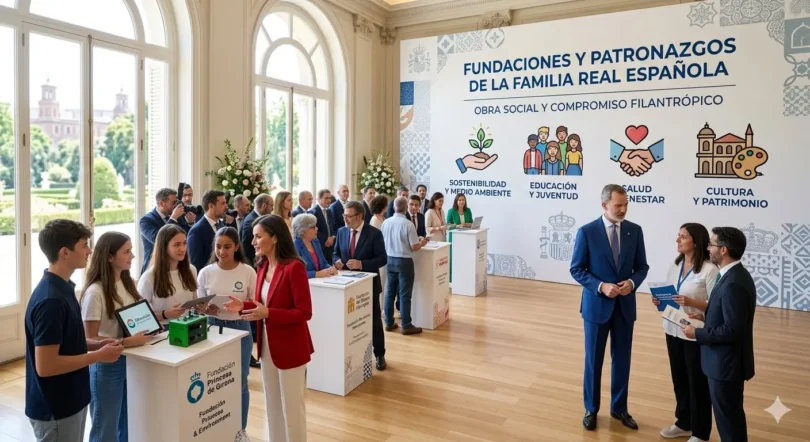
The Spanish Royal Family has long-standing connections with foundations and organisations working in education, youth development, health, culture, science and social support. King Felipe VI, Queen Letizia, Princess Leonor, Infanta Sofía and Queen Sofía each have different relationships with foundations and charitable institutions.
These relationships can include honorary presidencies, patronage, board meetings, public events, awards and institutional support. The Royal Family does not directly operate every organisation. In many cases, members serve as patrons or honorary figures who help give public visibility to the work.
Table of Contents
- What Are Foundations and Patronage?
- How Royal Patronage Works in Spain
- King Felipe VI and Royal Foundations
- Queen Letizia and Her Patronage Work
- Princess Leonor and Youth Foundations
- Infanta Sofía and Foundation Activities
- Queen Sofía and Her Foundation
- Major Foundations Connected With the Royal Family
- What Do Royal Patrons Actually Do?
- Are Royal Foundations Government Organisations?
- Key Takeaway
- FAQs
What Are Foundations and Patronage?
Foundations are organisations created to support specific social, cultural, educational, scientific or charitable goals.
Patronage refers to the relationship between a public figure and an organisation they support. A royal patron may serve as an honorary president, chair meetings, attend events or represent the organisation publicly.
In Spain, members of the Royal Family have connections with several foundations. Their involvement varies from organisation to organisation.
For example, King Felipe VI is linked with foundations focused on culture, youth and social development. Queen Letizia has a strong connection with health, education and social causes. Queen Sofía has her own foundation with projects covering health, social action, education and environmental issues.
How Royal Patronage Works in Spain
Royal patronage is not the same as running a charity.
A foundation normally has its own board, management structure, finances and projects. A royal family member may provide public support while professional teams handle daily operations.
A royal patron can:
- Attend foundation meetings
- Chair or participate in board meetings
- Present awards
- Meet beneficiaries
- Visit project locations
- Support fundraising events
- Highlight important social issues
- Represent the organisation at public events
This model allows foundations to keep their own organisational structures while benefiting from royal visibility.
King Felipe VI and Royal Foundations
King Felipe VI has connections with several foundations and associations.
The official Royal Household biography states that he is honorary president of several foundations, including the Prince of Asturias Foundation, the Prince of Girona Foundation and the Hesperia Foundation.
Princess of Asturias Foundation
The Princess of Asturias Foundation has roots going back to 1980.
Its work is connected with cultural and moral values and the promotion of achievement across different fields.
The organisation is also known internationally for the Princess of Asturias Awards.
In June 2026, King Felipe VI and Queen Letizia presided over the annual meeting with members of the foundation’s boards of trustees at the Royal Palace of El Pardo. The meeting included new trustees and discussions about the institution’s work.
Princess of Girona Foundation
The Princess of Girona Foundation focuses strongly on young people.
Its work includes youth development, talent, education, employment and entrepreneurship.
King Felipe VI has had a long relationship with the foundation, while Princess Leonor has become its central royal figure as Princess of Girona.
In June 2026, the King and Queen presided over a meeting of the foundation’s Executive Committee at Zarzuela Palace.
Hesperia Foundation
The Hesperia Foundation has a particular focus on young people and social projects.
The Royal Household states that King Felipe VI and Queen Letizia preside over the foundation. Its stated objectives include youth training, social projects and culture.
Queen Letizia and Her Patronage Work
Queen Letizia has developed a strong connection with foundations working in health, education, social welfare and culture.
Her activities show that patronage can involve much more than attending ceremonial events.
Health and Scientific Foundations
Health is one of Queen Letizia’s most visible areas of public work.
In June 2026, she and King Felipe VI received the Board of Trustees and Scientific Council of Fundación Lilly at Zarzuela Palace for the foundation’s 25th anniversary.
She has also participated in activities connected with cancer research, mental health, rare diseases and other health issues.
Fundación FAD Juventud
Queen Letizia has served as honorary president of Fundación FAD Juventud.
The organisation focuses on young people and prevention of behaviours that can harm personal and social development.
Her role illustrates how royal patronage can be connected with youth education and public health.
Fundación Mujeres por África
Queen Letizia has also served as honorary president of Fundación Mujeres por África.
The foundation works with women and supports projects involving education, research and development.
Her participation has included meetings with researchers and students supported by foundation programmes.
Fundación Residencia de Estudiantes
Education and culture are also part of Queen Letizia’s foundation work.
In June 2026, she chaired a meeting of the Board of Trustees of the Fundación Residencia de Estudiantes in Madrid.
The institution has a long history as a meeting place for science, arts and humanities.
Princess Leonor and Youth Foundations
Princess Leonor is gradually taking a larger role in organisations focused on young people and education.
Princess of Girona Foundation
The Princess of Girona Foundation is one of the most important organisations connected with her public role.
Its programmes support young people through education, employment, entrepreneurship and recognition of talent.
The foundation also organises the Princess of Girona Awards.
In July 2026, Princess Leonor participated in activities connected with the 2026 awards at the Gran Teatre del Liceu in Barcelona.
Youth and Disability Activities
Princess Leonor and Infanta Sofía also participated in a meeting with young people with disabilities in Madrid in July 2026.
Although this was not simply a foundation event, it shows how their public work overlaps with social inclusion and youth issues.
United World Colleges Foundation
The Royal Family also maintains a relationship with the Spanish committee of United World Colleges.
In July 2026, King Felipe VI, Queen Letizia, Princess Leonor and Infanta Sofía received the foundation’s board, scholarship sponsors and students at Zarzuela Palace.
The organisation is connected with international education and scholarships for young people.
Infanta Sofía and Foundation Activities
Infanta Sofía is taking on more public engagements as part of her gradual introduction to official responsibilities.
Her foundation-related activities have mainly involved education, youth and social inclusion.
In July 2026, she participated in the Princess of Girona Awards activities and attended an audience with the Spanish Committee of United World Colleges.
She also joined Princess Leonor at the meeting with young people with disabilities.
These appearances suggest that education and youth development are becoming important areas of her public role.
Queen Sofía and Her Foundation
Queen Sofía has one of the longest-running foundation relationships in the Spanish Royal Family.
The Queen Sofía Foundation works across several areas, including social action, health, education, environment and women’s issues. Queen Sofía serves as chair of its Board of Patrons.
Alzheimer’s Research
The foundation is particularly known for its work related to Alzheimer’s disease and other neurodegenerative conditions.
Its work includes research, awareness, care and training.
In 2026, the foundation continued projects in neurodegenerative disease research. It also expanded a precision medicine project for Alzheimer’s and other neurodegenerative diseases for another three years with support from Fundación Ramón Areces.
Social Projects
The Queen Sofía Foundation also supports vulnerable groups.
Its 2025 accounts show that charitable spending included social projects, research and awareness of Alzheimer’s and other neurodegenerative diseases, environmental projects and education.
The foundation’s accounts were voluntarily audited by an independent auditor, providing additional financial transparency around its activities.
Major Foundations Connected With the Royal Family
The following table gives a simple overview of several important organisations.
| Foundation or Organisation | Royal Connection | Main Focus |
| Princess of Asturias Foundation | King Felipe VI and Queen Letizia | Culture, awards and achievement |
| Princess of Girona Foundation | Princess Leonor and King Felipe VI | Youth, education and talent |
| Hesperia Foundation | King Felipe VI and Queen Letizia | Youth, social projects and culture |
| Queen Sofía Foundation | Queen Sofía | Health, social action, education and environment |
| Fundación Lilly | Queen Letizia and King Felipe VI participate in activities | Science and health |
| Fundación Mujeres por África | Queen Letizia, honorary president | Women, education and development |
| Fundación FAD Juventud | Queen Letizia, honorary president | Youth and prevention |
| Fundación Residencia de Estudiantes | Queen Letizia, patronage role | Science, arts and humanities |
| Spanish Committee of United World Colleges | Royal Family participation | International education and scholarships |
Royal connections can change over time, so a foundation’s current governance structure should always be checked with the organisation itself or the Royal Household.
What Do Royal Patrons Actually Do?
A royal patron can have several responsibilities.
Public Representation
A royal family member may represent a foundation at important events and meetings.
This can increase public attention around the organization’s work.
Board Participation
Some royal patrons participate in meetings of boards of trustees.
For example, King Felipe VI and Queen Letizia have attended meetings involving the boards of the Princess of Asturias Foundation and Princess of Girona Foundation.
Awards and Recognition
Royal family members often present awards to researchers, young professionals, teachers, artists and other contributors.
These ceremonies can give recognition to work that benefits society.
Meeting Beneficiaries
Another important role involves meeting students, researchers, patients, teachers, young people and representatives of social organizations.
These meetings allow royal patrons to hear directly from people connected with a foundation’s work.
Are Royal Foundations Government Organizations?
No.
A foundation connected with a member of the Royal Family is not automatically a government department.
Foundations generally have their own governance structures and financial arrangements.
This distinction matters when discussing the cost of royal patronage.
A royal appearance at a foundation event does not mean that the Royal Household pays all of the foundation’s expenses.
Similarly, the Royal Household’s annual budget should not automatically be treated as the budget of every foundation with a royal connection.
Are Foundations Funded by the Royal Household?
Not necessarily.
Funding depends on each organization’s own structure.
Foundations can receive money from donations, grants, sponsorships, investments, partnerships or other sources.
The Queen Sofía Foundation, for example, publishes financial information about its income, expenses and projects. Its 2025 accounts listed donations and legacies as well as financial income and rental income.
Therefore, royal patronage and foundation funding should be treated as two separate subjects.
Why Is Royal Patronage Important?
Royal patronage can give organizations additional visibility.
When a member of the Royal Family attends a scientific meeting, presents an award or visits a project, media and public attention can increase.
The effect can be particularly useful for areas such as:
- Youth education
- Scientific research
- Cancer awareness
- Alzheimer’s research
- Social inclusion
- Cultural preservation
- International education
- Women’s development
- Environmental projects
However, the actual impact of a foundation depends on its programs, funding, management and measurable results.
Foundations vs Patronage vs Royal Initiatives
These terms are related but not identical.
| Term | Meaning |
| Foundation | An organization created to support specific goals |
| Patronage | A royal member’s formal or honorary relationship with an organization |
| Royal initiative | A project, campaign or activity supported by a royal |
| Board of Trustees | The group responsible for governance of many foundations |
| Honorary President | A senior representative role that may not involve daily management |
Understanding these differences makes it easier to assess the Royal Family’s role accurately.
Key Takeaway
Foundations and patronage are an important part of the Spanish Royal Family’s public work.
King Felipe VI has long-standing relationships with organizations such as the Princess of Asturias Foundation, Princess of Girona Foundation and Hesperia Foundation. Queen Letizia has patronage connections across health, youth, education, culture and social causes. Princess Leonor is becoming increasingly connected with youth-focused foundations, especially the Princess of Girona Foundation.
Queen Sofía continues to lead her foundation, which supports health, social action, education and environmental projects.
These relationships generally involve public representation, board participation, awards, meetings and support rather than direct day-to-day management.
FAQs
What is royal patronage?
Royal patronage is a formal or honorary relationship between a member of a royal family and an organization. It can involve public representation, board meetings, awards and other activities.
Which foundations are linked to King Felipe VI?
The Royal Household lists the Princess of Asturias Foundation, Princess of Girona Foundation and Hesperia Foundation among foundations with which King Felipe VI has a significant connection.
What foundation is associated with Princess Leonor?
Princess Leonor is strongly associated with the Princess of Girona Foundation, which focuses on young people, education, employment, entrepreneurship and talent.
What does the Queen Sofía Foundation do?
The Queen Sofía Foundation works in social action, health, education, environment and other areas. It is also well known for its work on Alzheimer’s and other neurodegenerative diseases.
Does Queen Letizia support foundations?
Yes. Queen Letizia has participated in activities involving foundations connected with health, science, education, youth, culture and social issues.
Does royal patronage mean the Royal Family owns a foundation?
No. Patronage does not normally mean ownership. Foundations have their own governance structures and legal responsibilities.
Do royal foundations receive money from the Spanish government?
Not automatically. Each foundation has its own funding structure. Government grants may be one source of funding for some organizations, but royal patronage itself does not establish government funding.
What is the Hesperia Foundation?
The Hesperia Foundation focuses on youth training, social projects and culture. King Felipe VI and Queen Letizia have served as honorary presidents.
Why do royal family members support foundations?
Their involvement can provide public visibility, recognition and institutional support for organizations working in areas such as health, education, youth development, science and culture.
Conclusion
Foundations and patronage provide one of the clearest ways to understand the Spanish Royal Family’s wider public work.
King Felipe VI has established relationships with major foundations connected with culture, youth and social development. Queen Letizia has developed a broad patronage role covering health, education, science and social causes. Princess Leonor is taking a larger role in youth-focused organizations, while Infanta Sofía is beginning to participate more frequently in foundation-related activities.
Queen Sofía’s foundation remains especially important for health and social projects, with Alzheimer’s and neurodegenerative disease research continuing as a major area in 2026.
Together, these foundations show how royal patronage works through partnerships with independent organizations rather than through direct government administration.